


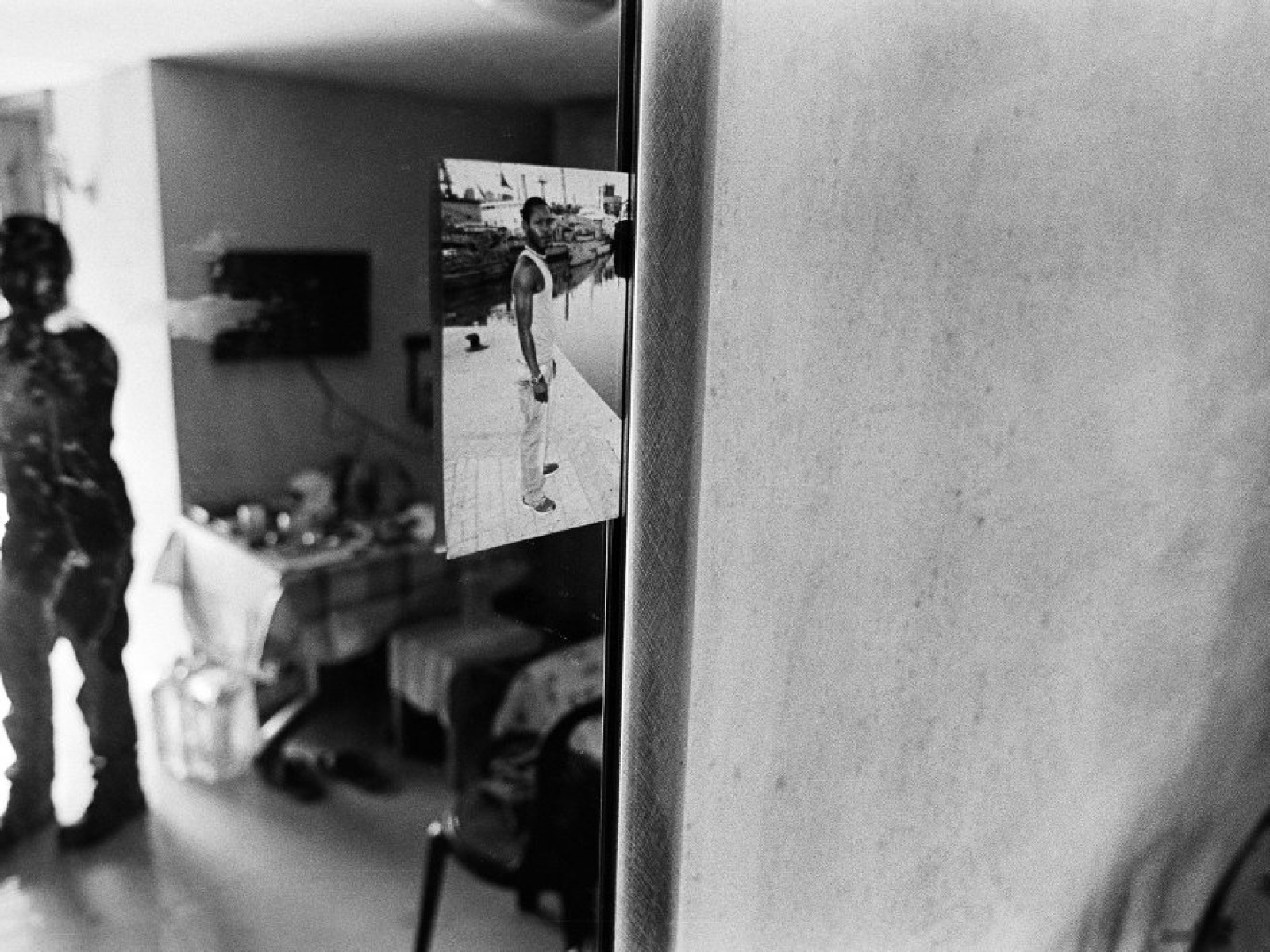
Early last year, while in Malta, I met Ibrahim and Abdul. Ibrahim was originally from Sierra Leone and Abdul was from Somalia. After working nine years on my project Nowhere People I was putting together what I thought would be the final chapter on Europe. I had already spent time in Ukraine, Holland and Serbia and had made two trips to Italy. Working with the local organization Aditus, my time with Ibrahim and Abdul in Malta exposed me to an entirely new element of the issue of statelessness.
The huge exodus of migrants, refugees and asylum seekers into Europe had already started but it would be several more months before it would turn into headlines by the international press.
Abdul and his wife had fled war in Somalia, crossed the Mediterranean and in Malta had been rejected twice for asylum. Somalia refused to acknowledge both as being citizens of the country. They were now stuck, living in a converted container in an immigration facility outside of Valetta.
Ibrahim had fled war in Sierra Leone when he was a child. He had lived in Gambia for years with family and then spent years migrating across northern Africa, through Mali and into Libya where he spent several years working and saving up enough money for the journey to Europe. The war in Libya was the catalyst that found him finally on a boat crossing the sea in hopes of getting to Italy. His boat was intercepted in Malta. Without any documents he was put into immigration detention, which is where he would spend the next year and a half. During that time Sierra Leone would not acknowledge him as a citizen and his claims for asylum in Malta were rejected twice.
“Having citizenship was the best thing I was thinking of when I was in detention,” Ibrahim said. “In fact, when I got to Malta I was thinking that this would be the place where I will be given a document that says ‘he is from here and they want here to be his home’. When I received the rejection and I was in detention it means there is no home for you again. That’s devastating. I felt like I would never get out of detention. After the one year and two months I spent in detention, they said it was freedom, but it was still not freedom because you cannot move from here to anywhere, you are still on the island. It’s like you are still in prison.” Ibrahim said.
Later he would describe how each day, from the rooftop of the small single room apartment he rented, he would see planes passing by and ships taking people from here to there. It was a freedom he felt he would never have.
Both Adbul and Ibrahim had taken language tests, had provided detailed descriptions of the villages where they had lived in Somalia and Sierra Leone, but the evidence they provided still wasn’t enough for either country to recognize them. With their asylum claims rejected and also rejected by their home countries, however dysfunctional those countries might be, the two were literally stranded on an island. How many more are out there like Abdul and Ibrahim? How long will it take before the scope of statelessness in Europe is really known, especially with the numbers of people entering Europe over the past year?
Ten years of working to document the lives of stateless people and communities has now developed into the book Nowhere People. What I started in late 2005 wasn’t just about photographing stateless people and communities. It was more about using photography as a means to actually bring all of these stateless people together. To create a collective portrait of this global community so many people in the world know so little about. To see that this element of the human condition these people share is made more tangible for as many people as possible.
'Nowhere People' was released in November 2015. For more information about the book or the book, please visit this website. www.nowherepeople.org


